
The Cornerstone · Primary cast-iron system
Sump pump installation & replacement
A heavy cast-iron submersible pump, sized to your pit and the water it actually sees, installed by a crew that does nothing but sump pumps.
- Sized to your pit and inflow
- New check valve and discharge fittings
- Tested with a full pit before we leave
What’s included
Done right, done once.
Sizing, not guessing
We watch how fast your pit fills and how high the water has to be lifted before we pick a pump. Too small and it can’t keep up; too big and it short-cycles and wears out early.
Cast iron as the primary
Cast-iron housings shed motor heat into the surrounding water better than plastic ones, which is a big part of why they tend to last. It’s the only kind we install as a primary pump.
New check valve and fittings
A new pump on an old, sticking check valve is half a job. We replace the valve and any tired fittings on the discharge line.
Old pump hauled away
The old pump leaves in our van, not on your curb.
Full-pit test
We fill the pit and watch the pump start, empty and shut off, then confirm the water is leaving the line and draining away from your foundation.
A tag on the pipe
Install date, pump model and the name of the tech who did the work, wired to your discharge line.
Know the signs
Signs it’s time for a new pump
- It runs nonstop, or clicks on and off every few minutes
- It hums but doesn’t move water
- You hear grinding, rattling or clanking
- There’s heavy rust, or the float keeps sticking
- Water has come up over the rim of the pit
- You have no idea how old it is
Not sure what you’re looking at? That’s what we’re for. We’ll test it, tell you what we find, and give you a written price before any work.

How a visit goes
What to expect when we come out.
-
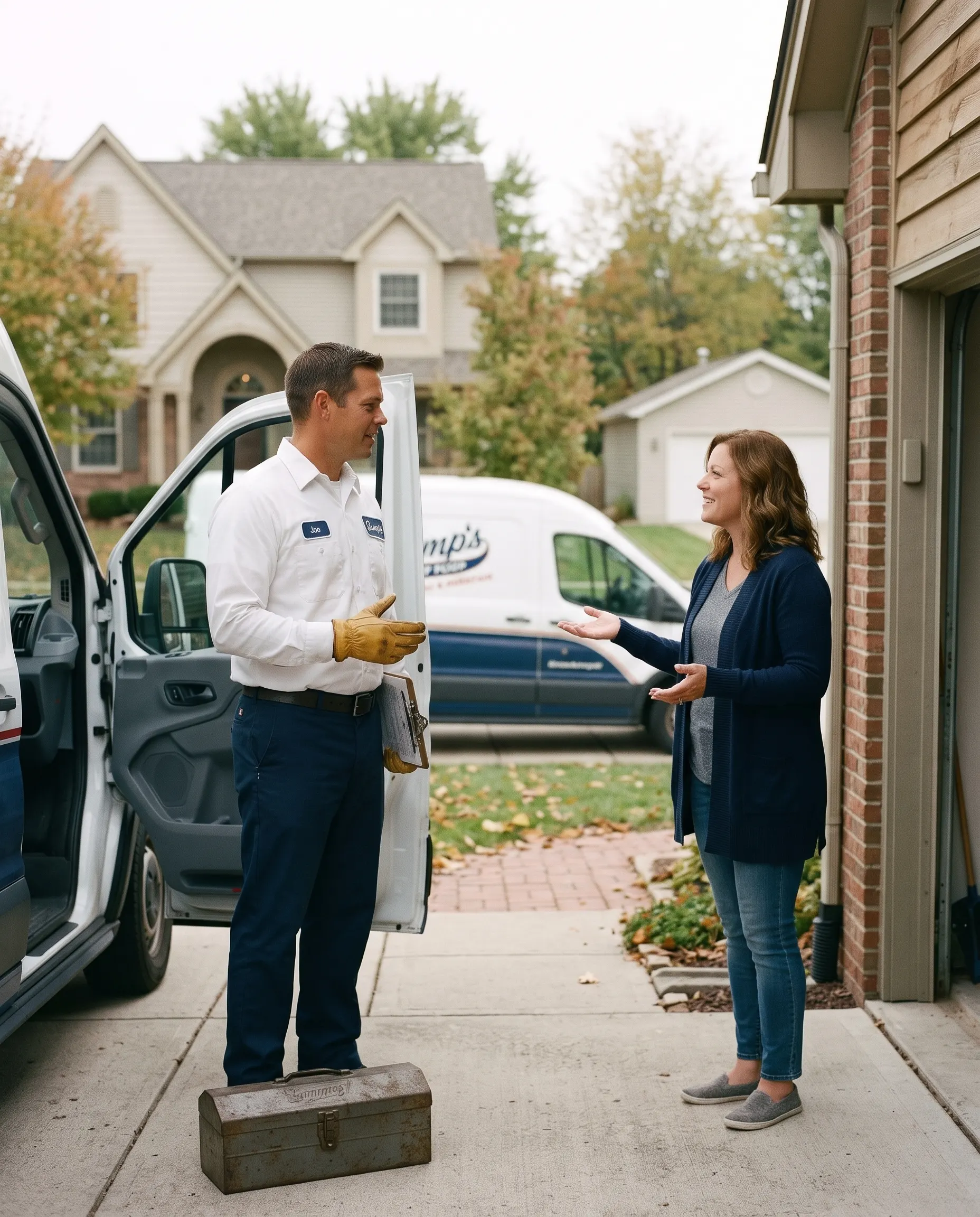
We call ahead
A two-hour arrival window, and a call when we’re on our way.
-
Covers on, cloth down
Shoe covers at the door and a drop cloth by the pit. Your basement stays the way we found it.
-
Test first, then quote
We fill the pit, run the pump and check every part. You get a written price before any work starts.
-
Tag on the pipe
Every visit ends with a signed inspection tag wired to your discharge line — the date, the readings, and who was there.
FAQ
Installation & Replacement: common questions
How long does a sump pump last?
It depends on how hard it works. Many pumps last somewhere around 7 to 10 years, and a well-sized cast-iron pump that’s checked every year often does better. If you don’t know how old yours is, that alone is a good reason to have it looked at.
How long does a replacement take?
A straight swap usually takes a few hours. If the pit, discharge line or check valve needs more work, we’ll tell you before we start and put the price in writing.
Why cast iron instead of plastic?
Cast iron is heavier, handles heat better and keeps the motor running cooler. Plastic pumps cost less up front. We’ll explain the trade-off honestly, but cast iron is what we put in as a primary.
Can you put a sump pump in a basement that doesn’t have one?
Sometimes. It means cutting the floor for a pit and tying into drain tile, so we look first and tell you plainly whether it’s worth doing in your house.
Where we work
Installation & Replacement near you.
Based in Hudson and serving 25 communities across Northeast Ohio.
- HudsonSummit County
- Boston HeightsSummit County
- PeninsulaSummit County
- StreetsboroPortage County
- MacedoniaSummit County
- RemindervilleSummit County
- Silver LakeSummit County
- AuroraPortage County
- TwinsburgSummit County
- RichfieldSummit County
- Sagamore Hills & Northfield CenterSummit County
- Bath TownshipSummit County
- Bainbridge TownshipGeauga County
- Fairlawn Heights & Montrose-GhentSummit County
- SolonCuyahoga County
- BrecksvilleCuyahoga County
- BentleyvilleCuyahoga County
- Chagrin FallsCuyahoga County
- Moreland HillsCuyahoga County
- BeachwoodCuyahoga County
- Orange & Pepper PikeCuyahoga County
- Hunting ValleyCuyahoga County
- Sharon Township & HinckleyMedina County
- Gates MillsCuyahoga County
- Shaker HeightsCuyahoga County
Other services

Already in the neighborhood
Book your visit.
Tell us where you are and what’s going on. We’ll call back to confirm and find a two-hour window that works for you.